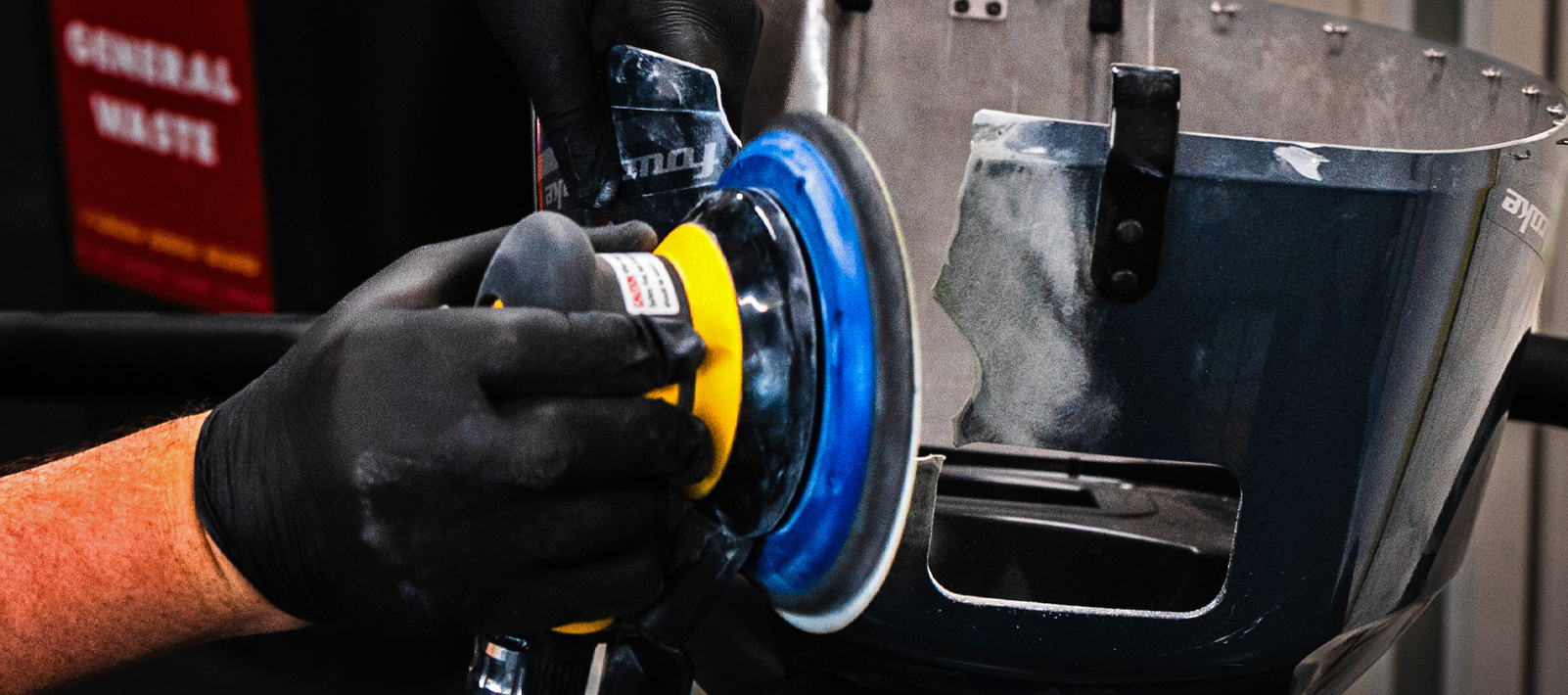
Sanding is one of the most important steps before applying a RAPTOR Coating or Filler. It creates a gritted and rough surface for the RAPTOR to bite into, ensuring the finish is tough, durable, and resistant to lifting or peeling.
Be sure to gear up with the correct PPE as discussed in our How-To Guide on correct PPE for RAPTOR. A dust mask or approved respirator and eye protection are a must when sanding and preparing a surface.
No matter your project, thorough sanding and surface preparation will ensure RAPTOR products perform exactly as intended. This How-To Guide focuses on abrading and sanding your surface in preparation for RAPTOR products
Why Do You need to Sand for RAPTOR?
RAPTOR products won’t adhere correctly to glossy, smooth, or unprepared surfaces. Abrading or sanding a surface creates fine scratches that provides a surface for RAPTOR to “bite
into.
A good rule of thumb is, if the surface is shiny or smooth, it needs to be sanded before applying RAPTOR Coating or Filler.
Always be sure to clean the surface both before and after sanding as well. Check out our How-To Clean a Surface for RAPTOR for more info.
What Grit Should I Use for RAPTOR?
Choosing the right grit abrasive is important, too fine and RAPTOR won’t adhere correctly, too coarse and you may leave deep scratches or damage your surface.
Here’s a quick guide to suggested grits for different substrates. For exact grits and preparation, refer to the specific Technical Data Sheet for each product.
Aluminium requires proper cleaning and thorough abrading prior to applying RAPTOR products, aluminium should be abraded with p180 grit. A common surface we see is aluminium checker plate, it’s important to ensure the surface has been abraded along all highs and lows. Similarly, ensure the surface has been entirely cleaned prior to priming, filling, or coating.
Bare metal must be thoroughly abraded to ensure optimal adhesion for RAPTOR primers. Bare metal areas should be abraded with p80 grit and primed with RAPTOR Acid Etch Primer or RAPTOR Anti-Corrosive Epoxy Primer for large surfaces, projects, or industrial applications.
Chrome is not an approved substrate for RAPTOR products; it is a difficult to prepare substrate that can present troubles with adhesion. The optimal method would be to remove the chrome entirely; however, good results may be achievable with extra preparation. A good option for preparing chrome is to sand as coarsely and as much as possible, apply 2 coats of RAPTOR Acid Etch Primer or RAPTOR Anti-Corrosive Epoxy Primer, and then topcoat.
Concrete must be clean, dry, and free of loose debris. Use a stiff brush to remove loose material and pressure wash or scrub the surface thoroughly, allow it to dry completely. For optimal results we recommend sealing the surface first using proprietary concrete sealer, prior to applying suitable RAPTOR products.
Ensure to remove all flaking and delaminating material. Abrade with p180 grit to achieve a smooth and even finish, ready for RAPTOR Fillers or RAPTOR Adhesion Promoter.
Prior to sanding, ensure the existing paint is in good condition and firmly bonded, not failing, flaking or lifting. OEM paint can be abraded with p180 grit, ensure to remove any failing coating, and be aware of bare metal rub throughs which will require a coating of RAPTOR Acid Etch Primer to prevent rust and moisture.
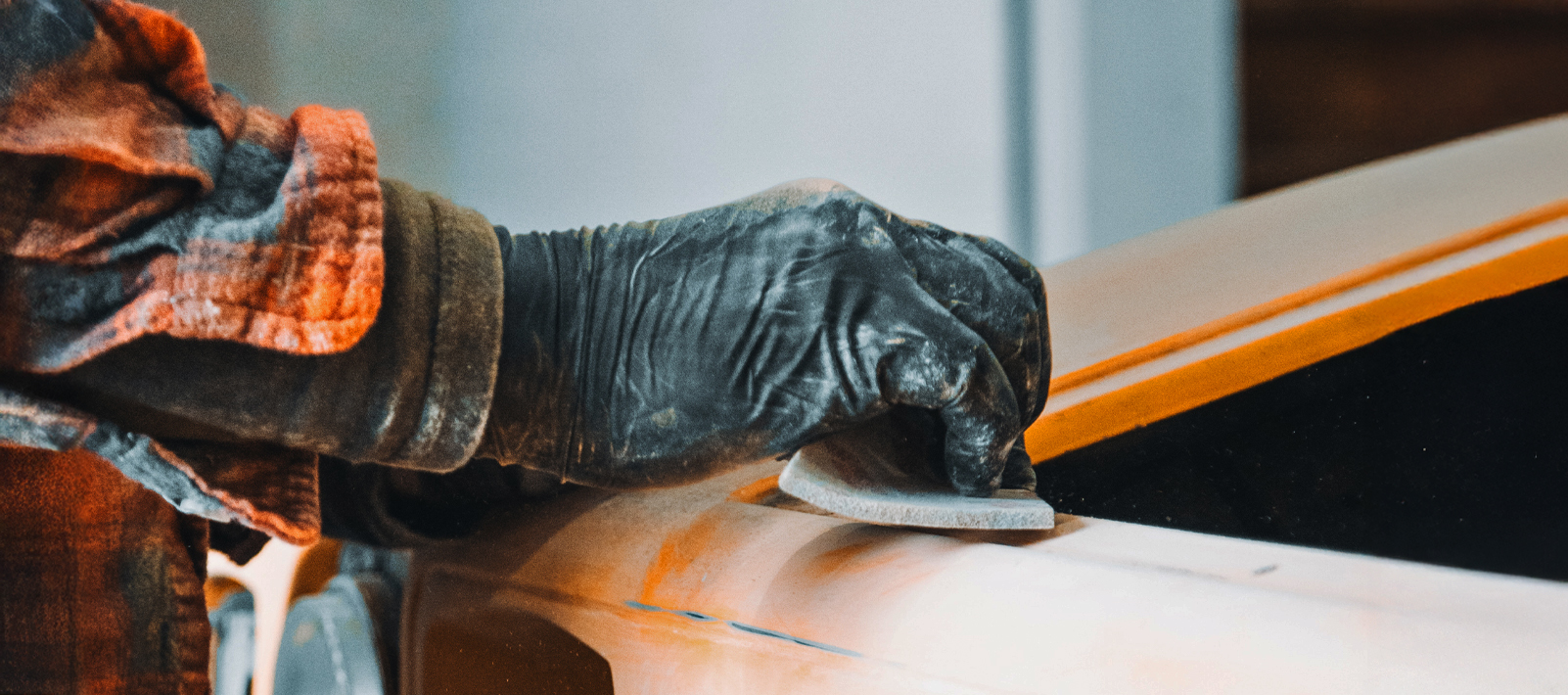
Most trims, flares, and other automotive plastics can involve hard to reach areas, sanding sponges and pads can be a handy tool for ensuring an even finish. Plastics can be abraded with p180 grit. It is important to ensure the entire surface, including nooks and edges, have been properly sanded prior to applying fillers or RAPTOR Adhesion Promoter.
The first step is to ensure the powder coating isn’t chipping or delaminating, if so, remove the failing areas and sand back to bare metal. Abrade the remaining powder coating with p180 grit and prime bare metal areas with 2 coats of RAPTOR Acid Etch Primer prior to filling or coating.
Wood is generally a straightforward substrate for RAPTOR products. Ensure the wood is stable and clean, remove any flaking material or loose existing paint. Sand lightly with p120 grit to achieve a smooth surface and ensure the wood is completely dry and clean prior to applying RAPTOR products on top.
Clean After Sanding
After sanding, your surface will be covered in debris, dust, and contaminants. The next step is to ensure the surface is properly cleaned again prior to priming, coating, or filling. Compressed air is ideal for removing the bulk of dust, followed by the two-rag cleaning method mentioned in our How-To Clean a Surface Guide. Finish with a tack cloth to remove any remaining contaminants before applying RAPTOR products.
Check Out This How-To Video
For privacy reasons YouTube needs your permission to be loaded. For more details, please see our Privacy Policy.