Navigate this How-To Guide
RAPTOR Fibreglass Filler is a long strand glass fibre-reinforced body filler engineered for tough, structural repairs that require superior strength and durability. Designed for use on fibreglass, steel, aluminium, and other rigid substrates, it is ideal for repairing holes, splits, cracks, and heavy panel damage. The reinforced formula delivers a strong, water-resistant repair while remaining easy to shape and sand for professional refinishing results.
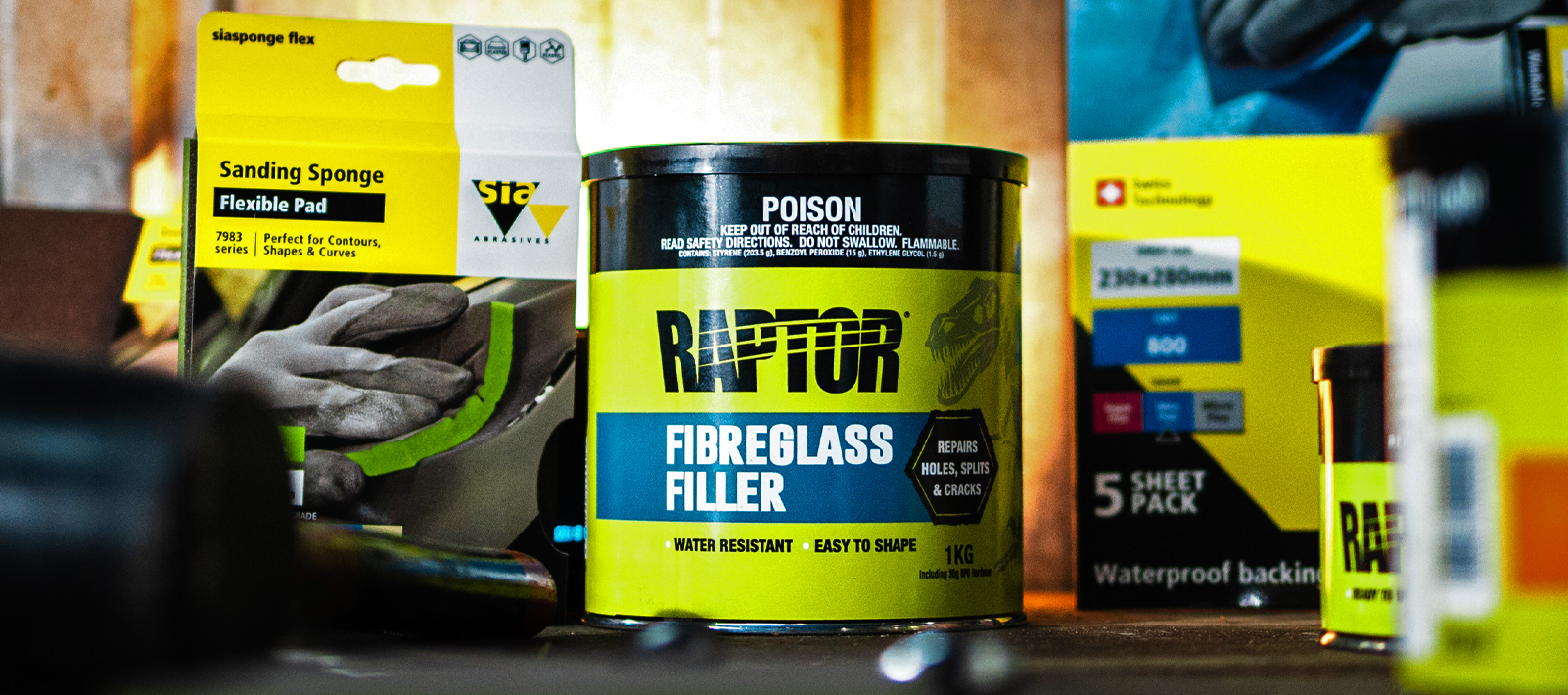
Be sure to check out our How-To Guides on cleaning and sanding surfaces and ensure you are wearing the appropriate PPE before taking on any project. Take the time to read the RAPTOR Fibreglass Filler Technical Data Sheet prior to application, and feel free to reach out to our team should you have any questions!
Where Can RAPTOR Fibreglass Filler be Used?
RAPTOR Fibreglass Filler is ideal for:
- Repairing holes, splits, and cracks in panels and fibreglass
- Water prone
- Structural repairs requiring extra strength
- Marine, trailer, and heavy-duty restoration work
Its long strand glass fibre-reinforced formula delivers exceptional strength and rigidity, making it the ideal solution where standard body fillers may not provide enough structural support.
Step 1 – Prepare Your Surface
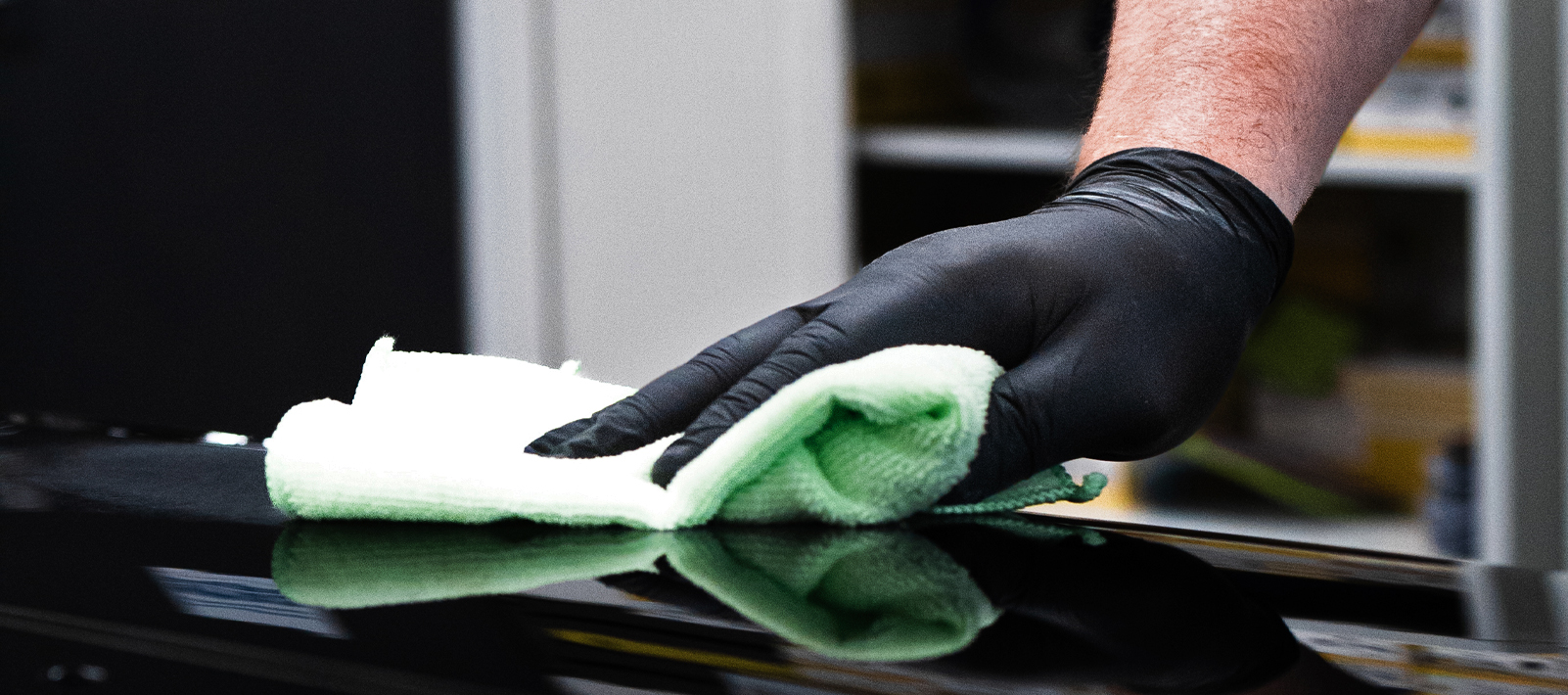
For a complete run down on preparing your surface ready for filler, check out our guides on How-To Clean a Surface and How-To Sand a Surface. Here’s a quick run down on the necessary steps before application:
- Clean and degrease the repair area
- Remove rust, loose coatings and fibreglass, or unstable materials
- Sand the repair area (read the TDS for the correct grit for each substrate)
- Re-clean the surface to remove any sanding residue and contaminants
Step 2 – Mixing RAPTOR Fibreglass Filler
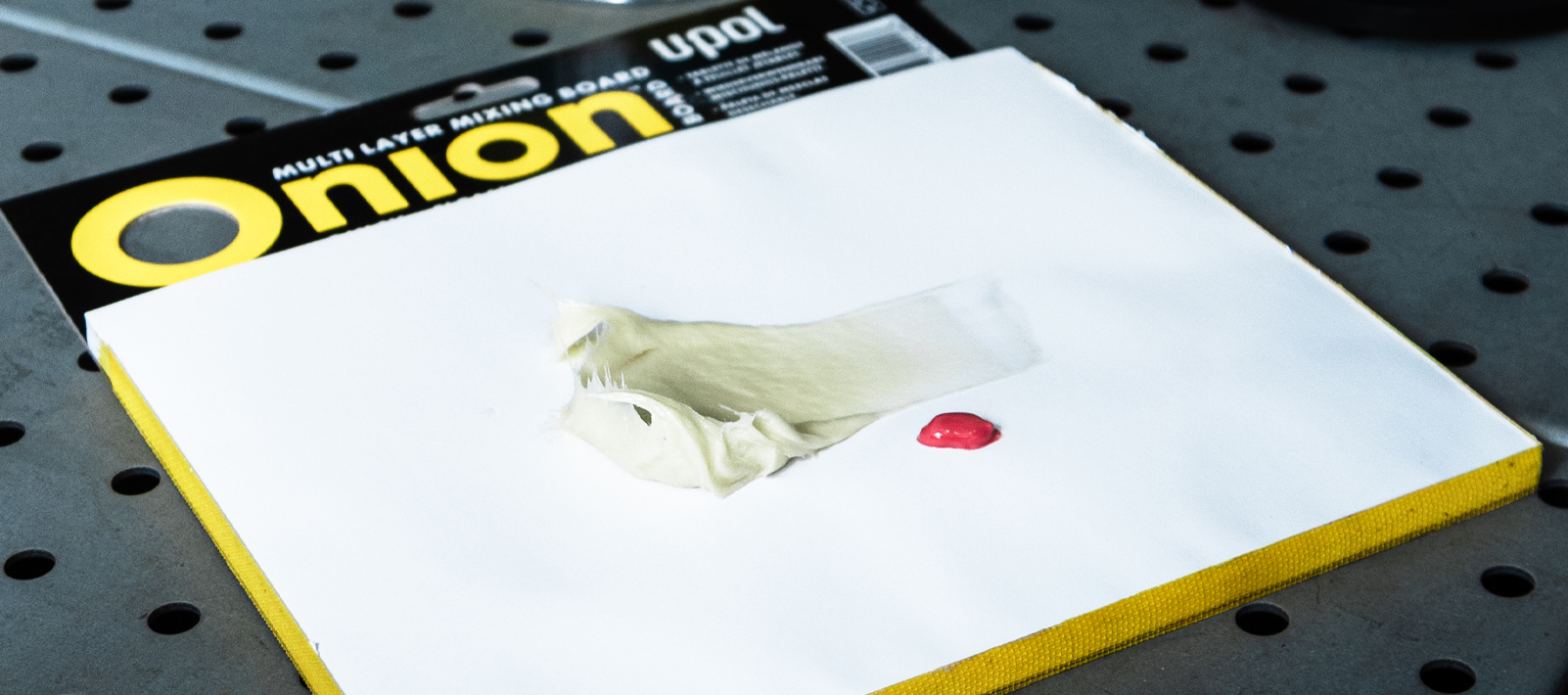
The first step is to find a suitable mixing surface, DO NOT mix on cardboard as it will absorb the solvents and resins from the filler. We suggest mixing on a non-porous mixing surface such as a stainless-steel board, wax paper, or ideally or ideally a U-POL Onion Board.
When it comes to mixing in your hardener you want to ensure you have the correct amount for your temperatures and conditions. Too much hardener and your filler will be difficult to work and will start to cure before you can apply it. Too little and you’ll be waiting for it to cure.
The go to rule of thumb for is “a pea to a golf ball”. One pea-sized amount of hardener for every golf-ball-sized portion of filler.
|
10°C |
20°C | 30°C | |
| Hardener Required | 4% | 3% |
2% |
When mixing in your hardener, you want to work it in entirely. Take your applicator and form it into a “C” shape, place it perpendicular to your mixing board and use a figure-eight motion for approximately 30 seconds until colour is uniform. Press out your filler to ensure you cannot see the hardener, if you still see your hardener simply follow the same process and mix the filler again until it is all one, even colour.
Avoid folding your filler over on itself as it can cause air entrapment and pinholes in your final finish.
Step 3 – Applying Your Filler
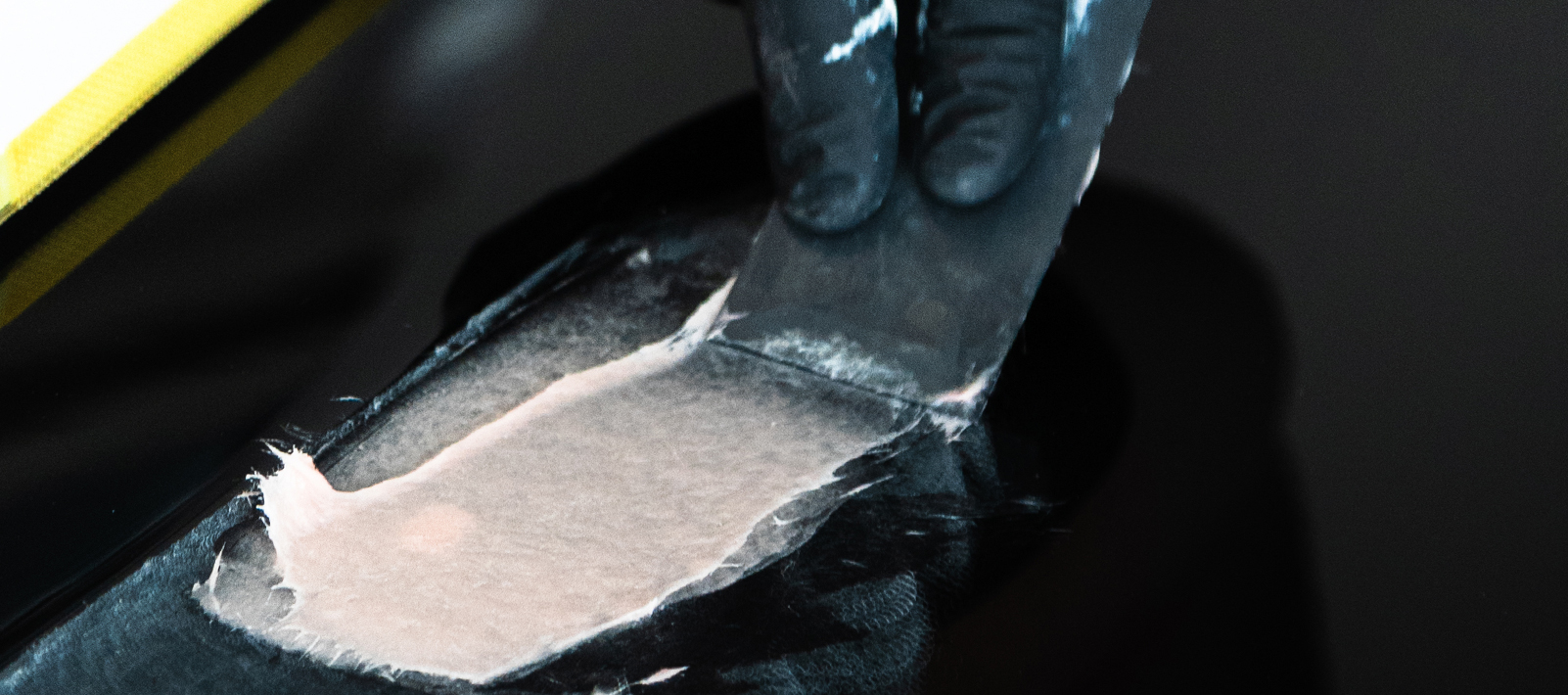
To apply RAPTOR Fibreglass Filler, use firm, even pressure, to press the filler into the repair. You want to apply a smooth film immediately after mixing, aiming for multiple thin coats as opposed to one thick coat. Ensure your repair has been thoroughly filled before attempting to smooth and level the surface.
Application tips:
- Apply in thin layers rather than one heavy coat
- Maximum fill depth: 4–7 mm
- Build deeper repairs in multiple applications
- Use steady. even pressure to reduce trapped air
Step 4 – Curing and Sanding
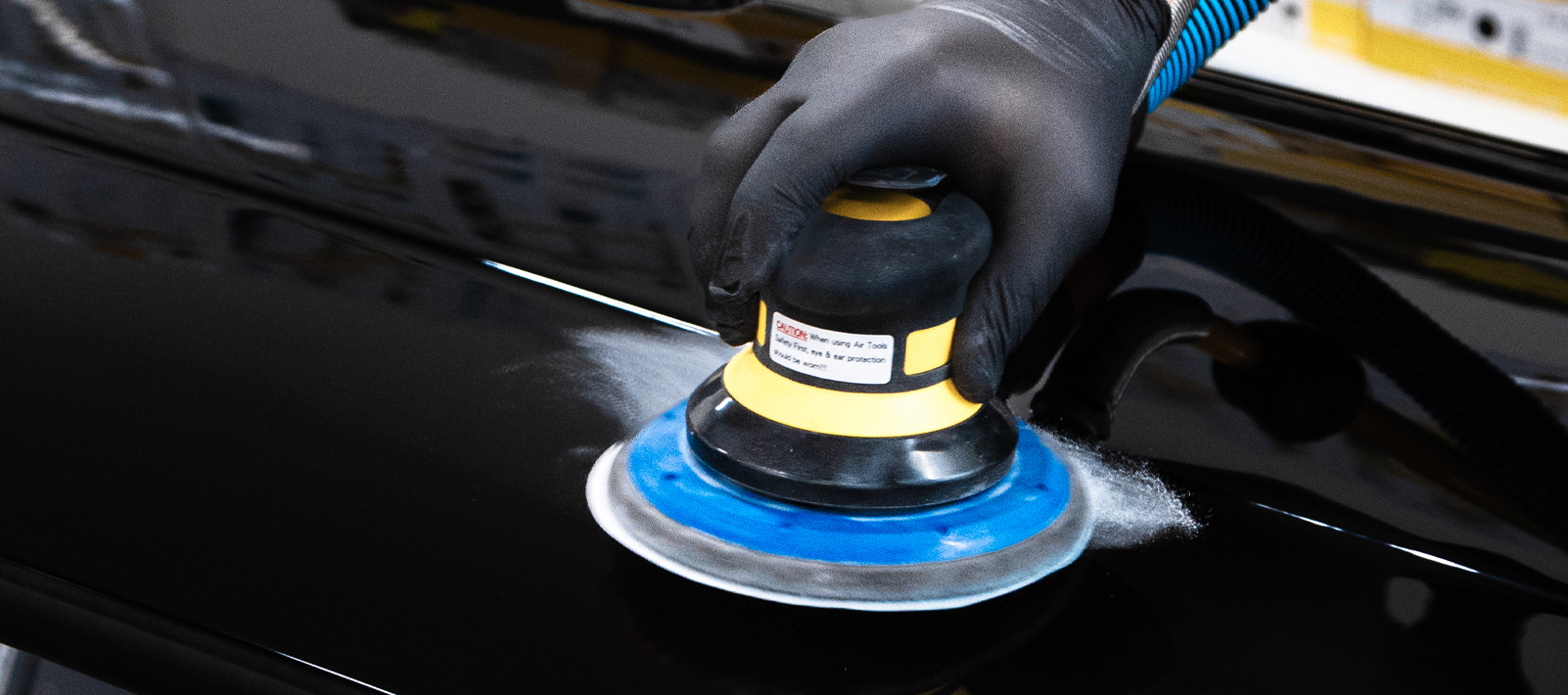
Once cured and your repair is filled, it’s time to sand your filler down and get ready for priming and coating. Sanding can be tackled in two different steps, an initial pass to remove the excess filler and to shape your final finish, then a second pass to ensure your finish is perfect and ready to coat.
Initial sanding: P80–P120 to shape the repair
Final sanding: P180–P240 to finish prior to priming
If your final finish shows signs of pinholes and minor imperfections, you can apply RAPTOR Finishing Glaze to finish the surface, we recommend this for the best results and achieving a professional finish.
Here is a guide on when you can start sanding your RAPTOR Fibreglass Filler after application:
|
10°C |
20°C | 30°C | |
| Sandable After | 20 mins | 15-20 mins |
15 mins |
Pro Tips for Professional Results
- Add the correct amount of hardener to avoid bleeding and spot marking
- Always mix thoroughly, ensuring no hardener is visible
- Apply with an even, firm, pressing action to minimise pinholes
- Build deep repairs gradually in layers
- Apply RAPTOR Finishing Glaze for a professional quality finish
Frequently Asked Questions
How much hardener do I need for RAPTOR Fibreglass Filler?
The go to rule of thumb for is “a pea to a golf ball”. One pea-sized amount of hardener for every golf-ball-sized portion of filler. Refer to the TDS for exact mixing ratios
How thick can RAPTOR Fibreglass Filler be applied?
The maximum fill depth is 4–7 mm per layer. Deeper repairs should be built in stages.
What causes pinholes in filler repairs?
Pinholes are small, trapped air bubbles that appear as holes in your surface after sanding, they are commonly caused by incorrect mixing or not enough pressure during application.
How soon can RAPTOR Fibreglass Filler be sanded?
At 20°C RAPTOR Fibreglass Filler is typically sandable in 15–20 minutes. This can change depending on temperature and mixing ratios